


.webp)
Megantic has released a whitepaper with Shopify APAC on the risks Australian eCommerce brands face in AI-driven search, arguing that many retailers are unprepared for answer engines and AI shopping tools.
The paper focuses on Answer Engine Optimisation, or AEO, which it describes as structuring online content and product information so AI systems can interpret and cite it. It argues retailers can no longer rely solely on traditional search engine optimisation if shoppers increasingly use chatbots and other AI tools to research or complete purchases.
According to figures cited in the paper, Shopify found 64% of shoppers are likely to use AI to some extent when making purchases. It also highlights a growing research-to-purchase pattern in which consumers make buying decisions without visiting a retailer's website.
That shift affects how brands appear online. If AI systems choose which products, stores or policies to show users, retailers without structured, machine-readable data may not appear at all, even if their search rankings for human users remain steady.
Retail shift
Megantic argues the issue is particularly acute because the change may not be obvious in conventional web metrics. Traffic can appear stable while recommendation and discovery functions move elsewhere, especially as AI tools become another layer between consumers and retailers.
The paper also highlights Shopify's move into what it calls agentic commerce. It says Shopify has introduced Agentic Storefronts, allowing AI agents to connect with merchant systems, distribute product information across AI channels and complete transactions without shoppers visiting a merchant's site directly.
Rhys Furner, Director of Partnerships at Shopify APAC, said the company sees a broader change in how brands are found and evaluated online.
"Search is becoming a conversation, and commerce is becoming agentic. In 2026, visibility is less about being the loudest-and more about being the easiest for machines to understand and trust: clean product data, clear policies, accurate inventory, and a checkout that can execute reliably wherever intent shows up," Furner said.
The report frames this as a structural challenge rather than a marketing trend. It argues that product catalogues, stock information, site hierarchy and policy pages now matter not only for customers, but also for the AI systems that may recommend, summarise or transact on a customer's behalf.
Traffic trends
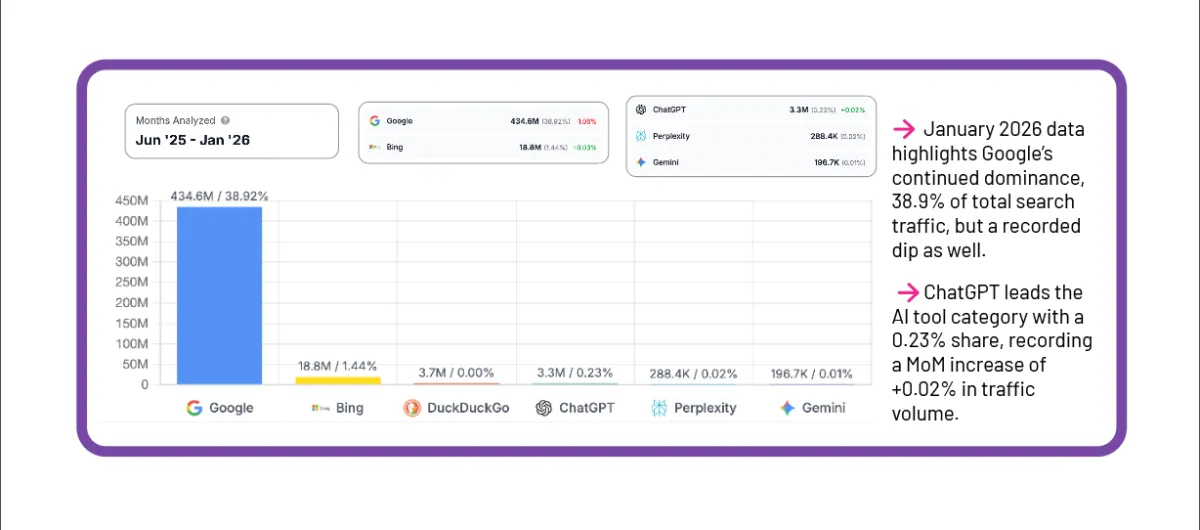
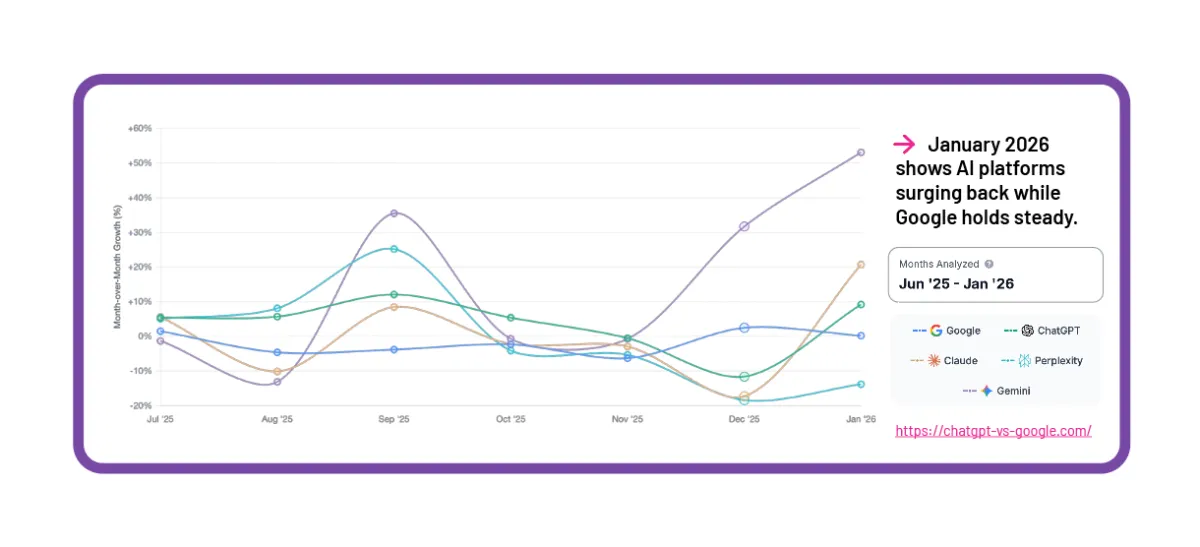
Megantic also points to broader usage patterns across AI and search platforms. It says chatgpt.com recorded 5.5 billion visits in one month, with an average session length of more than 13 minutes, while Google still held the largest share of total search traffic at 38.9% despite a dip.
The paper also notes growing attention on other AI tools, including Claude and Gemini. It says Anthropic's Claude has seen strong download growth in the United States, while OpenAI and Anthropic have both announced plans to establish their first local presence in Sydney.
For online retailers, the immediate concern is not whether Google disappears, but whether discovery fragments across multiple AI interfaces. In that environment, brands may need to be legible to both conventional search systems and large language models that summarise options for users.
Jeremy Hanger, General Manager at Megantic, said the effects are already visible across the sector.
"We're already seeing shockwaves across the eCommerce landscape. As Australians increasingly discover brands through AI-powered experiences, the brands that move early on AEO will have a significant competitive advantage," Hanger said.
Data focus
The whitepaper's recommendations focus on familiar digital retail disciplines, including structured site architecture, accurate product data, clear category hierarchies and authoritative content. Megantic's argument is that these elements must now be designed so machines can parse and trust them, not just so human visitors can navigate them.
The paper also warns against treating AEO as a simple add-on or a guaranteed route to AI citations. No agency can promise a brand will be referenced by platforms such as ChatGPT, Gemini or Claude, it says, but inaction increases the risk of being overlooked.
Mark Baartse, Fractional CMO and Digital Marketing Consultant, linked the issue to a broader rethink of digital merchandising.
"As AI agents increasingly intermediate the shopping journey, your underlying data is your new storefront. We must move beyond simple keywords, combining a deep understanding of customer intent with rich, machine-readable data to marry the disparate needs of these two unique audiences," Baartse said.
Megantic is based in Melbourne and focuses on eCommerce search. The business says it has completed more than 1,000 SEO projects over 15 years for brands including Aquila, Milligram, The House of Golf, Gregory Jewellers and Muscle Nation.