


Zoom has introduced new customer experience tools for its contact centre and communications products, centred on a unified customer context system for AI agents, live agents and phone teams.
The new features are part of a broader effort to keep customer history connected across calls, chats, kiosks and other interactions. The aim is to reduce the need for staff to reconstruct a customer's previous activity across separate systems before deciding what to do next.
At the centre of the update is what Zoom calls a unified context layer. It brings together information from customer engagements, transcripts, CRM records and live conversations, then uses AI to identify the details most relevant to a given interaction.
That information is intended to be shared across Zoom Virtual Agent, Zoom Contact Centre and Zoom Phone. The same customer context can follow an interaction whether it begins with an automated assistant, moves to a contact centre agent or is picked up by an employee outside the contact centre using the company's phone system.
Zoom is also adding customer profiles through an expanded customer directory. According to the company, those profiles combine CRM data, engagement history and linked cases into a single view that updates as customers continue to interact with a business.
Chris Morrissey, general manager of Zoom CX, outlined the company's position on the product changes.
"Every interaction a customer has with a business, whether it's a call, chat, kiosk visit, or conversation with a virtual agent, generates context that should make the next one smarter. The real opportunity is connecting that information and putting it to work. Zoom already powers so many of the conversations between businesses and their customers, and we're turning that intelligence into something people and AI can act on, helping businesses deliver more proactive service, more informed interactions, and faster resolution without putting the burden on the customer," said Morrissey.
Physical channels
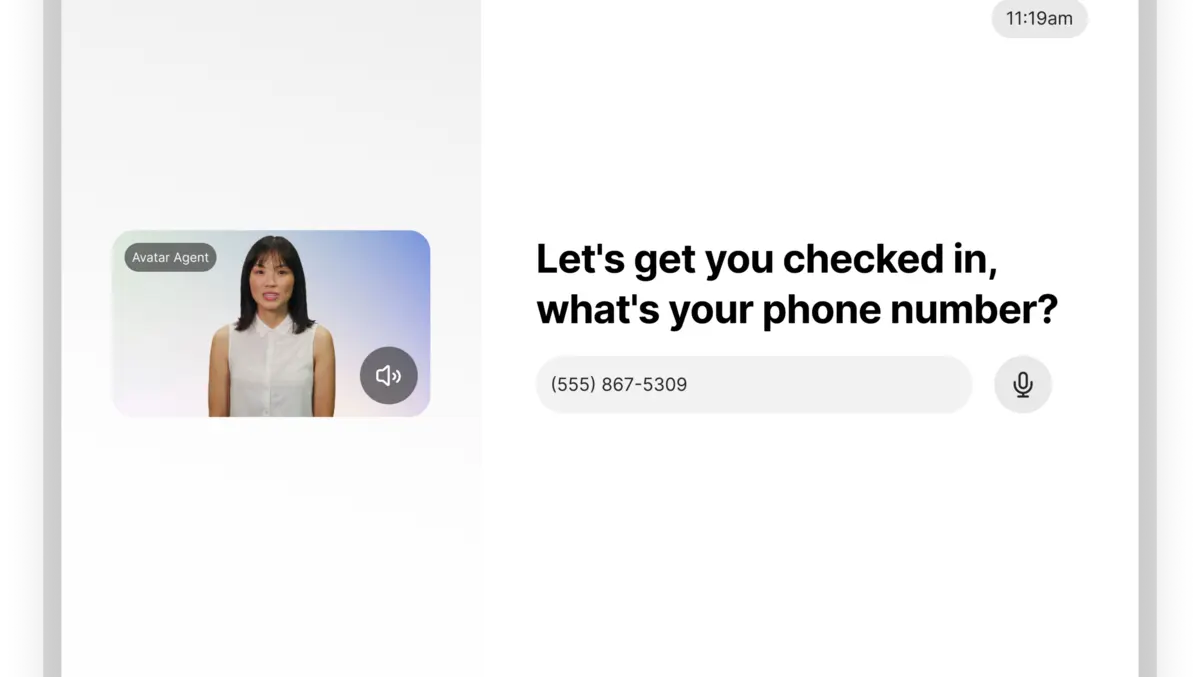
Another part of the rollout extends Zoom Virtual Agent to kiosks in physical settings such as shops, healthcare sites and service centres. The kiosk version uses the same customer context and profile data as Zoom's digital channels and is designed to handle requests directly before passing them to staff if needed.
The kiosk system can support multimodal interactions, including visual recognition through a camera. If an issue cannot be resolved there, the interaction can be transferred to a worker on site, to Zoom Phone or to Zoom Contact Centre for remote support.
Zoom is also introducing Agent Architect, a tool intended to simplify the creation of virtual agents. Teams can feed call transcripts into the system, which then generates a virtual agent flow by identifying intents and common response patterns from those conversations.
Workflow tools
Alongside the front-end changes, Zoom outlined new workflow and desktop functions intended to keep customer cases moving after the initial interaction ends. Source Hub will allow agents to access and update third-party records from within the Zoom desktop, with Salesforce listed as the first supported integration.
Customer Workflow Orchestrator is designed to automate follow-up processes that span multiple systems and teams. The tool can evaluate conditions, trigger next steps and pause until an external event occurs, such as confirmation that a returned item has reached a warehouse, before resuming the workflow.
Analytics expansion
For supervisors and contact centre leaders, Zoom is extending analytics, quality management and training functions. CX Insights transcript intelligence will classify voice, chat and email transcripts and allow managers to query them in natural language alongside operational data such as handling times, queues, agents and outcomes.
Zoom is also adding alerts and recommended actions to CX Insights, allowing supervisors to identify patterns in transcript and performance data and act on those findings. Other additions include one-click executive briefing tools, third-party case reviews in quality management and AI roleplay for agent training.
The third-party case review function brings work from external systems into Zoom's quality management environment, where AI can score cases, detect topics and analyse sentiment across interactions and back-office activity. The roleplay feature allows supervisors to create voice exercises for onboarding, product launches and campaigns, then assess staff against measures such as empathy and policy adherence.
Zoom cited First Bank as a customer using its CX products.
"Our customers trust us with their financial lives, and that responsibility shapes how we think about every interaction. Zoom CX has helped us bring our teams onto a more connected platform while giving associates the AI tools and information they need to better support our clients. We were up and running in just 100 days, and we've continued expanding what our teams can do without losing the personal service our customers expect," said Christian Wilson, chief operating officer at First Bank.
Zoom also pointed to U.S. Oral Surgery Management, which uses Zoom Contact Centre and Zoom Phone for patient access and scheduling across more than 130 practices. Based on the organisation's internal analysis, the company said it projects savings of USD $2.7 million over five years and expects to reduce costs by 50% by the end of 2026.