

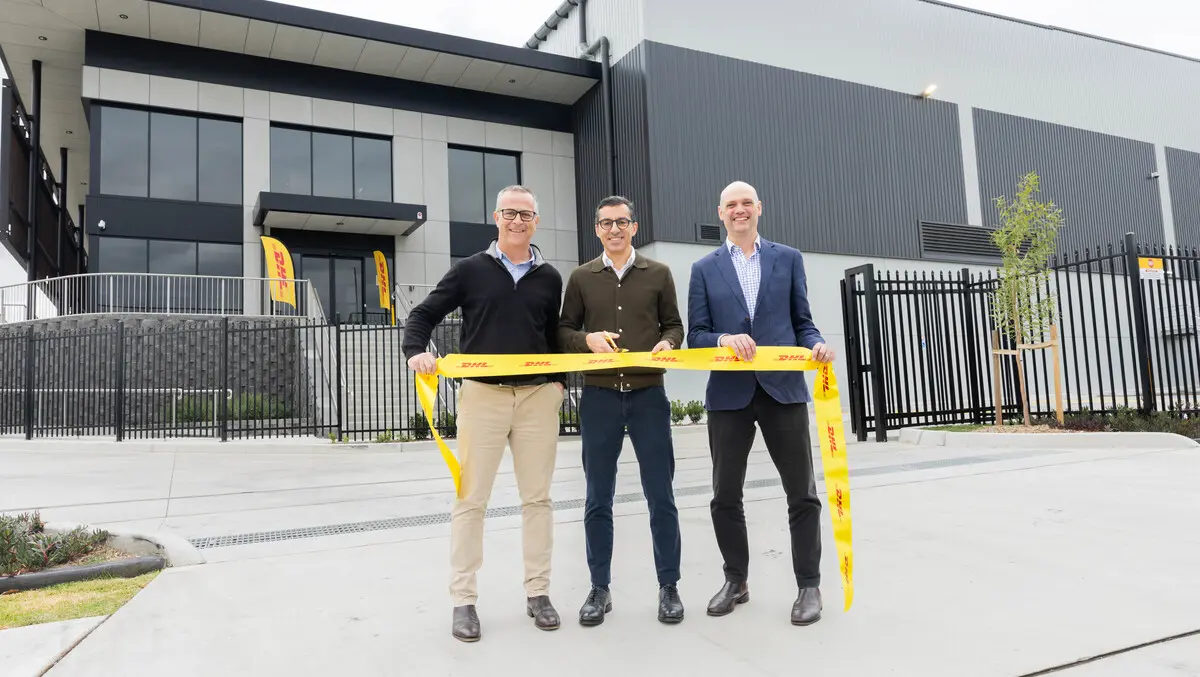
DHL opens Erskine Park hub for tech, auto reverse logistics
Thu, 19th Mar 2026.webp)
DHL Supply Chain Australia has opened a new warehouse at Erskine Park in Western Sydney, adding distribution and returns-handling capacity for technology and automotive customers.
The 21,078-square-metre site is a multi-customer facility in an established industrial area serving major transport corridors across Sydney and linking to national freight networks. DHL also noted its proximity to a planned DHL transport hub in the region.
Erskine Park has become a focal point for warehouse investment as logistics providers and retailers look for space closer to population centres and motorway connections. Western Sydney has also attracted more activity from companies managing spare parts and aftersales logistics, where delivery speed and returns processing often shape facility design and location decisions.
Site layout
The facility includes ambient storage with selective racking and block-stack space. It has eight recessed loading docks and six on-grade doors for vehicle access. A mezzanine provides space for rework and other on-site processing.
DHL said the building suits finished goods and spare parts operations and supports both business-to-business and business-to-consumer fulfilment. It will serve more than five customers, including companies in consumer electronics, white goods and automotive.
Returns focus
A key feature of the Erskine Park operation is reverse logistics. The site will handle returned products and spare parts under customer aftersales programmes, supporting returns management, returns shipping and technical services.
Technical services include inspection of consumer electronics and processing of spare parts returns. This work typically requires segregated areas for assessment and rework, alongside warehouse processes for put-away, storage and dispatch.
Reverse logistics has grown in importance as online sales expand and manufacturers tighten controls on warranty returns and refurbished stock. For automotive and technology firms, parts availability and effective recovery of returned items can affect customer service levels and working capital tied up in inventory.
Energy measures
DHL said the facility includes energy and resource-efficiency features, including 256 kWp rooftop solar panels, LED lighting with efficient controls, rainwater harvesting for non-potable uses and electric vehicle charging.
Warehouse operators are increasingly installing solar panels and energy management systems as power costs rise and customers ask for more reporting on emissions and energy use. EV charging infrastructure is also becoming more common at distribution sites, although fleet electrification remains uneven across heavy and light commercial segments.
Javier Bilbao, CEO DHL Supply Chain Asia Pacific, linked the investment to activity in Australia's technology and automotive markets.
"Australia is a key market for us, and we remain committed to supporting the country's growth, including its technology and automotive sectors. On the technology part, businesses in Australia have doubled their spending on data centres in just six months last year, and we have solutions that can help them. Likewise, we see growth in the consumer demand for the automotive sector, with nearly 99,000 new vehicles sold in 2025 and increasing aftermarket requirements," Bilbao said.
The opening comes as logistics providers report continued demand for space used for spare parts, repair flows and returns. These supply chains often require more handling steps than bulk distribution, along with traceability and quality checks, and can involve variable volumes as product launches, recalls and repair cycles fluctuate.
Bilbao said the project aligns with DHL's broader regional planning for warehouse capacity.
"Our Strategy 2030 focuses on delivering value to our customers, and we've been investing ahead of the curve in the region to strengthen supply chain resiliency and flexibility by expanding warehouse capacity and future-proofing logistics centres," he said.
Local investment
Steve Thompsett, CEO DHL Supply Chain Australia, said the facility reflects ongoing investment in DHL's Australian network. He also highlighted its suitability for returns processing and working conditions on site.
"The Erskine Park new facility reflects our ongoing investment in innovation, sustainability, and infrastructure. It's purpose-built to support reverse-logistics operations and deliver high-performance logistics solutions for our customers as well as a great site for our workforce. It unlocks new opportunities for growth, agility, and customer service excellence," Thompsett said.
DHL said the Erskine Park operation will provide integrated logistics services across inbound handling, storage, order fulfilment and returns, supporting a mix of finished goods and parts with different storage profiles and picking requirements.
The warehouse is expected to serve customers with both B2B delivery needs, such as replenishment to stores or service centres, and B2C needs, such as direct-to-consumer shipping. It will also handle value-added activities, including rework, through the mezzanine space.
DHL operates contract logistics services across transport management, warehousing and supply chain operations in Australia. DHL said the Erskine Park site will scale as customer requirements change across technology and automotive supply chains.